
Septic Systems
Septic System Installation & Repair in Champaign County, OH
A septic system is the single most expensive utility on a rural Ohio property, and it is the one nobody thinks about until it stops working. BS Farms & Contracting installs, services, and repairs conventional and advanced onsite wastewater treatment systems throughout Champaign, Logan, Miami, Clark, and Union Counties.
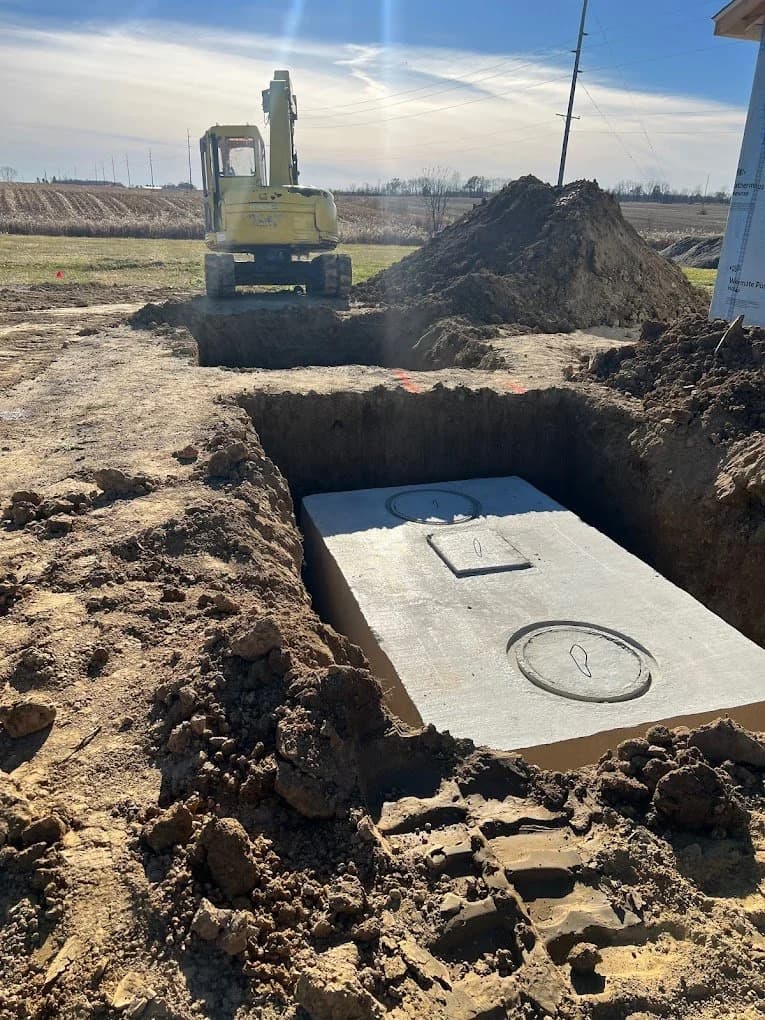
We handle the whole job in-house: coordinating the soil evaluation, working the permit through your county health district, setting the tank, building the leach field, and finishing the grade so the yard looks like we were never there. Because we own our excavators, dump trucks, and tank trailer, we are not waiting on a subcontractor to free up before your system goes in.
Ohio's onsite sewage treatment rules (OAC 3701-29) require a permit and a final inspection for new installs and most replacements. We manage that paperwork with your local health district so the system passes the first time.
Scope of work
What this service covers
- New septic system installation for new construction and rebuilds
- Complete system replacement for failed or undersized systems
- Leach field and drain field installation, repair, and replacement
- Septic tank replacement, riser and lid installation
- Distribution box (D-box) repair and leveling
- Effluent pump, float, and control panel replacement
- Line jetting, root intrusion clearing, and broken lateral repair
- Soil evaluation and health district permit coordination
- Real estate transfer inspections and point-of-sale repairs
- Final grading, topsoil, and seeding after every install
Signs your septic system needs attention
- Standing water, soggy ground, or unusually green grass over the drain field
- Sewage odor near the tank, the field, or in the basement
- Slow drains or gurgling toilets throughout the house, not just one fixture
- Backups into the lowest drain in the home
- Alarm sounding on an aeration or pump control panel
- The system is over 25 years old and has never been replaced
How it goes
The sequence, step by step.
You should know what happens next at every stage. Here is how we run this job.
- 01
Call and property overview
Everything starts with a phone call or online estimate request. We collect the basics: property address, lot size, household size, water source, and whether you are replacing a failing system or installing new for construction. This background lets us plan the right site visit and preview which system types are likely candidates.
- 02
Free on-site property evaluation
A BS Farms crew member visits your property at no charge. We walk the lot with you, read the terrain, identify candidate locations for the tank and absorption field, and note setbacks from wells, streams, property lines, and structures. We also flag anything that could add cost or complexity: a high water table indicator, a tight lot, or limited equipment access.
- 03
Certified soil evaluation
Ohio health districts require a certified soil scientist to evaluate soil suitability before any permit can be issued. The soil scientist visits the site, digs test holes to the required depth, and profiles the soil for texture and seasonal high water table indicators. The evaluation determines which system type your land can support: conventional gravity trench, pressure-dosed mound, aeration system, or another Ohio-approved design. We coordinate the soil scientist as part of the job.
- 04
Permit submission and review
We prepare the permit application and submit it to the county health district on your behalf, including the site plan, soil evaluation results, system design specifications, and setback calculations. Plan for two to six weeks from complete submission to permit in hand, depending on the county. We track the application and follow up with the health district so you do not manage that back-and-forth yourself.
- 05
Excavation and system installation
Once the permit is approved, we bring the equipment on site. The operator excavates the tank setback, distribution line trenches, and absorption field area to the permitted depth and grade. The tank is placed, distribution lines are run, and the field is built to the approved drawings. Most residential installations are complete in one to three working days depending on system type, field size, and site conditions.
- 06
County health district inspection
Before any backfill occurs, the county health district inspector must visit the site and confirm the installation matches the approved permit drawings. BS Farms schedules the inspection, coordinates site access, and stays on site so any questions from the inspector can be answered on the spot. Backfilling begins only after written sign-off is in hand.
- 07
Final grading, topsoil, and seeding
After inspection approval, we backfill the excavated areas, compact as needed, and rough-grade the disturbed ground. We spread topsoil and apply seed appropriate to the season. The area is left looking like a lawn under construction, not a raw excavation, and grass typically establishes within one full growing season.
Where we do this work
Septic Installation, Servicing & Repair across five Ohio counties.
Every county has its own health district, permit process, and soil profile. Pick yours for the local detail.
Champaign County
Champaign Health District
Logan County
Logan County Health District
Miami County
Miami County Public Health
Clark County
Clark County Combined Health District
Union County
Union County Health Department
Also serving Urbana, Springfield, Bellefontaine, Marysville, Troy, Piqua, St. Paris, Mechanicsburg, West Liberty, Tipp City, Plain City, Russells Point & Indian Lake, New Carlisle, Covington, Enon, West Milton, Bradford, North Lewisburg, De Graff, North Hampton, Richwood, South Charleston, Lakeview.
Common questions
Septic Installation, Servicing & Repair FAQ
Real answers, including the numbers people actually want.
It comes down to soil. A conventional gravity leach field on good soil costs meaningfully less than a mound system or an aeration system with a pump, control panel, and drip distribution. We give a firm written quote after the soil evaluation, not a number pulled before we have seen the ground.
On-site work is typically one to three days for a residential system. The longer part is the front end: soil evaluation scheduling and health district permit review usually add two to six weeks depending on the county and time of year. We start that clock the day you approve the quote.
Yes. Ohio Administrative Code 3701-29 requires a permit from your county health district for new installations and for replacement of a failed system, along with an inspection before the system is covered. We handle the permit application and schedule the inspection as part of the job.
Often, yes. A collapsed distribution box, a broken lateral, a failed pump, or roots in the line are all repairs, not replacements. A drain field that has truly failed hydraulically usually is not, but we tell you which one you have before you spend money, not after.
Related
Often booked with this.
Septic Tank Sales & Delivery
Poly tanks in a range of sizes, sold outright or delivered and set on your site.
View serviceAeration System Sales & Service
Aerobic treatment units for lots where a conventional leach field will not pass, sold, installed, and serviced.
View serviceTile Drain Repair & Replacement
Locate and repair broken field tile, or install new drainage to pull water off wet ground.
View serviceFree Estimates
Need septic installation, servicing & repair?
Free site visit, written estimate, and a straight answer on whether you need the full job or a smaller fix.